Cyber-resilience, from chip to cloud
There are already an estimated 20 billion connected IoT devices in the world, and by 2030 that number is expected to nearly double[1]. Attackers have noticed: in 2025, the average household faced around 29 attack attempts a day, nearly triple the year before[2]. Regulators are responding. The EU Cyber Resilience Act (CRA) makes cyber-resilience a legal requirement for most connected products sold in the EU from design to decommissioning, covering secure design, lifecycle and vulnerability management, security updates and vulnerability reporting.
Meeting that bar takes more than security features in silicon. Nordic’s chip-to-cloud security covers the whole product lifecycle:
- Secure hardware: next-generation SoCs with built-in protection such as isolation, cryptographic acceleration and tamper detection
- Secure firmware: IronSide, Nordic’s secure firmware, built on industry best practices and optimized for Nordic hardware, secure by design and by default.
- Lifecycle management: nRF Cloud and Nordic’s SDKs for firmware updates, CVE monitoring, vulnerability notifications and long-term support, so you can update and observe devices wherever they are deployed.
Additionally, Nordic provides comprehensive technical documentation, DevAcademy courses and world-class technical support and tooling to enable developers implement secure products with ease. Explore Nordic’s CRA resources further through this link.
[1] IoT Analytics, State of IoT 2025.
[2] Bitdefender and NETGEAR, 2025 IoT Security Landscape Report.
Creating secure products with ease
The industry is coming together to create streamlined best practices, frameworks, and certifications. Nordic aligns with PSA CertifiedTM to provide a standardized approach to security that guides customers through their individual security journey. Below we have highlighted a few simplified steps, guiding you towards a successful result:
Analyze - Threat models & security analysis
Architect - Hardware & firmware specifications
Implement - Firmware Source code

Certify - Independently tested
Security goals and objectives
At Nordic we have a clear goal when it comes to security. Enable everyone to design and deploy secure products, by:
- Making the right choices from the start.
- Understanding the threats and value of security
- Protecting critical assets against common threats
IoT product security can be divided into a few simple objectives every product should meet.
Secure boot and secure update with anti-rollback
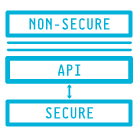
Isolation between secure and non-secure environments
Secure storage
Attestation and unique identification
Security Lifecycle
Cryptographic services
Learn more
Security device uses Nordic nRF5340 to determine and report unauthorized door access
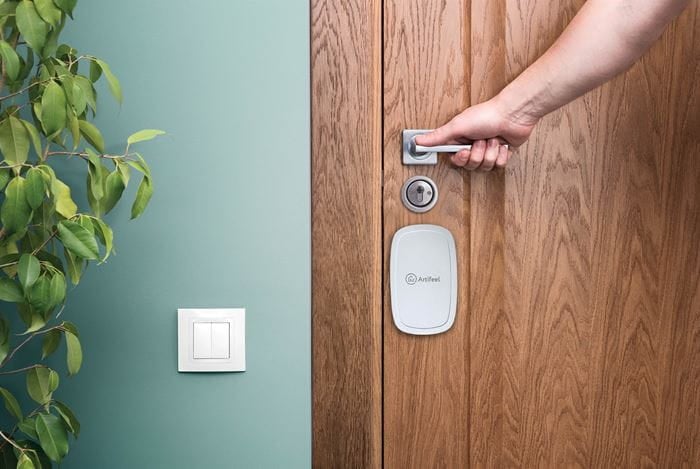
Artifeel’s Check’In employs Nordic nRF5340 SoC to run Zephyr RTOS for ML prediction model and enable Bluetooth LE for future features.
Learn more
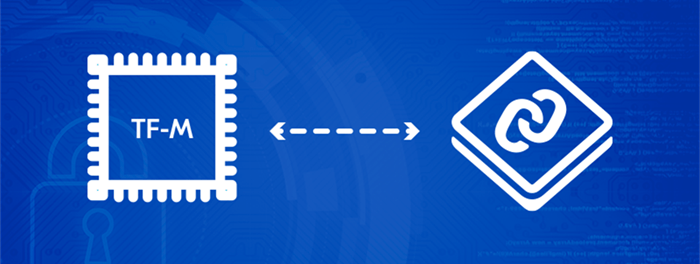
An Introduction to Trusted Firmware-M (TF-M)
Nordic Semiconductor recommends following the PSA Certified IoT Security Framework in your product development process. The four-step process of analyze, architect, implement, certify, provides a framework to guide your decisions from concept to production to ensure an appropriate level of security is implemented in your IoT device.
Learn more
Securing IoT products with PSA Certified APIs
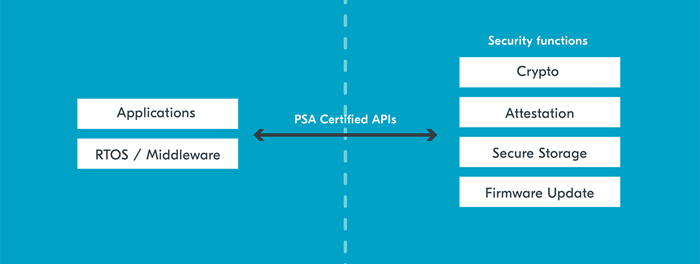
Internet-of-Things (IoT) devices are designed to connect to the internet and/or exchange information with other devices, making them a target for hackers who can exploit security vulnerabilities. Implementing robust security measures to ensure data integrity, confidentiality, and availability on those devices has become a priority.